COURSE CREATION
How to Create and Sell an Online Course as a Teacher
Think about the last truly great unit you taught.
The one where you broke a tricky concept into bite-sized lessons, sequenced them perfectly, checked for understanding along the way, and watched it click.
You already know how to create a digital course as a teacher. Course creation is unit planning for grown-ups: same backward design, same scaffolding, same “let me explain it another way” instincts. The only difference is that this time, the students pay you directly.
This guide walks through the whole process: picking a topic, outlining, the leanest tech setup that won’t eat your budget, recording without fancy gear, pricing, and launching. Teacher to teacher, with no edtech jargon and no four-figure platform required.
How to Create a Digital Course as a Teacher: The 7-Step Overview
Here’s the whole process at a glance. Each step gets its own section below:
- Recognize your unfair advantage (you have one)
- Pick a topic people will pay for
- Outline it like a unit plan
- Set up a lean, teacher-budget tech stack
- Record simply: done beats fancy
- Price with confidence
- Launch to your email list
Why Teachers Are Naturals at Course Creation
Let’s name the unfair advantage you walk in with:
- You design learning for a living. Scope and sequence? Learning objectives? Formative assessment? That’s a Tuesday for you. Most course creators pay coaches thousands to learn what you do on instinct.
- You explain hard things simply. If you can make long division click for a struggling 9-year-old, you can make anything click for an adult learner.
- You read the room. Teachers adjust mid-lesson when eyes glaze over. That instinct becomes your course improvement loop: you’ll spot where students get stuck and fix it fast.
- You already have an audience. Fellow teachers, teacher Instagram, teacher Facebook groups. Your buyers are the people already in your orbit.
The course industry loves to make this sound complicated. Underneath the jargon, it’s teaching, packaged.
Pick a Course Topic People Will Pay For
Golden rule of how to sell an online course as a teacher: lead with the outcome. Nobody buys “a course about guided reading.” They buy “finally feeling confident running guided reading groups instead of dreading them.”
Find your topic where three circles overlap:
- What you know deeply. The thing colleagues always ask you about. The workshop you could teach in your sleep.
- What keeps your audience up at night. Scroll teacher Facebook groups and Instagram comments. The same questions on repeat equal demand.
- What promises a clear before-and-after. “Go from chaotic mornings to a calm, connected classroom in 30 days” beats “classroom management strategies.”
Validation shortcut: before building anything, ask your audience directly: a poll, a question sticker, a simple “would you want this?” post. Ten enthusiastic yeses beat a hundred polite maybes.
Outline Your Course Like a Unit Plan
You know this dance. Start with the end in mind:
- Define the transformation. What will students be able to do after your course that they can’t do now? Write it as a learning objective. (See? Teacher superpowers.)
- Break it into 4-6 modules. Each module is one big step toward the transformation: units within a semester.
- List 3-5 lessons per module. One lesson, one concept. If a lesson needs an “and also,” split it.
- Add one action step per lesson. Courses that get completed get testimonials; courses that get testimonials get sales. Worksheets, checklists, templates: anything that turns watching into doing.
- Plan an early win. Put something achievable in module one. An early win keeps students moving.
Aim for a course students can finish in 2-4 weeks. Shorter courses get completed, and completed courses get recommended.
The Lean Tech Stack: Best Online Course Platforms for Teachers
Biggest myth first: you do not need an expensive all-in-one platform to start. Here’s the teacher-budget path:
The leanest stack (often under $50/month total):
- Host videos unlisted on YouTube: free, reliable, everyone knows how to use it.
- Deliver on a simple site or Google Site: module pages with embedded videos and downloads. It isn’t glamorous, and it works.
- Take payments simply: Stripe payment links, PayPal, or your existing website’s shop. You don’t need a cart system for launch one.
- Email with what you have: use your current email tool, or start on a free plan and upgrade when revenue justifies it.
When to upgrade: after your first few thousand dollars in revenue, look at dedicated course platforms if you want quizzes, certificates, and more automation in one place. Useful if you need those features. Unnecessary to start, and plenty of courses keep selling fine on the lean setup above.
Your teaching is what sells the course, not the platform.
Record Simply: Done Beats Fancy
Your students aren’t buying production value; they’re buying clarity. Minimum viable setup:
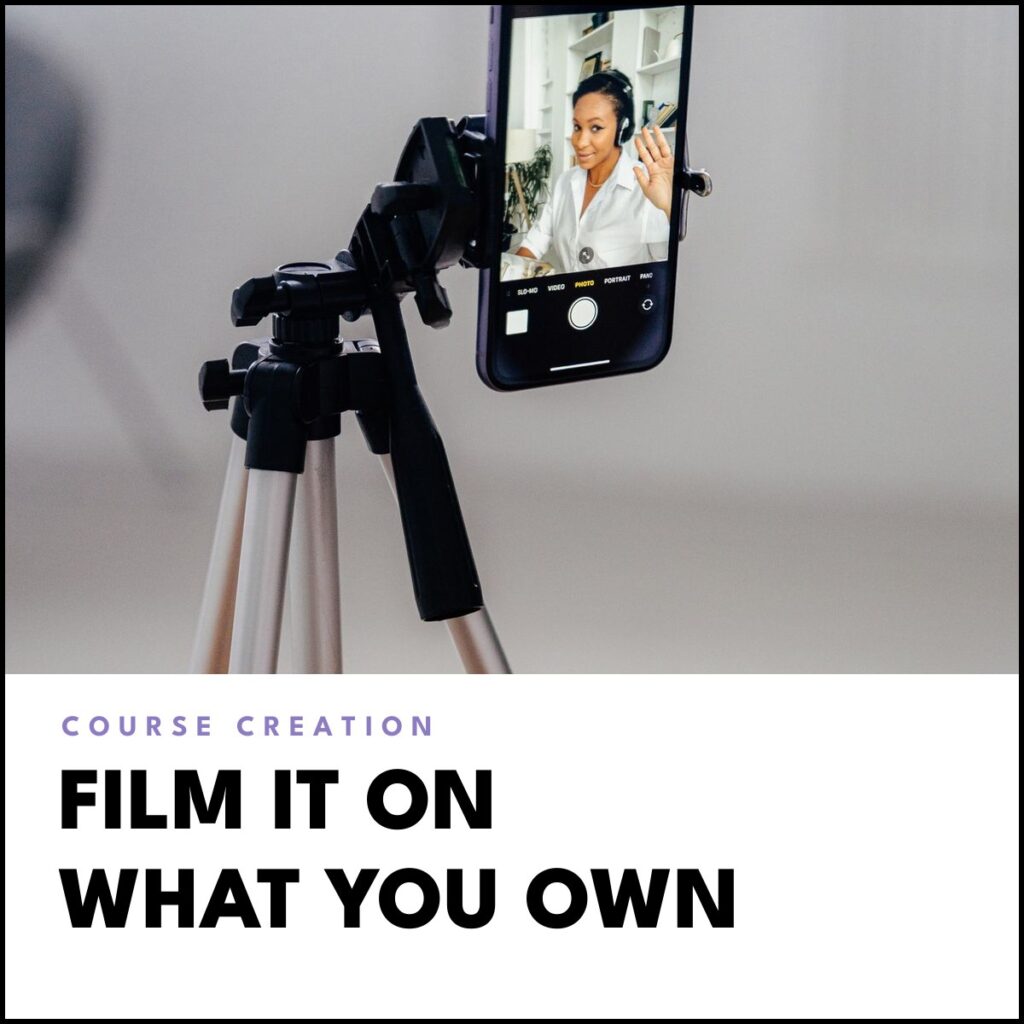
- Your phone or laptop camera is fine. Prop it at eye level, face a window for light.
- Audio matters more than video. A $30 lavalier mic transforms your sound. If they can hear you clearly, they’ll forgive everything else.
- Slides + voiceover is legitimate. Record your screen with free tools (Loom’s free tier, Zoom’s record button) while you talk through slides.
- Batch your recording. Outline everything first, then record in one or two sittings. Changing your shirt between modules: optional but encouraged.
Edit lightly. Trim the ums, cut the long pauses, export. Perfectionism is where courses go to die unpublished.
Perfectionism is where courses go to die unpublished.
Price It Like a Pro (Without the Ick)
Pricing feels personal. It’s actually math plus positioning:
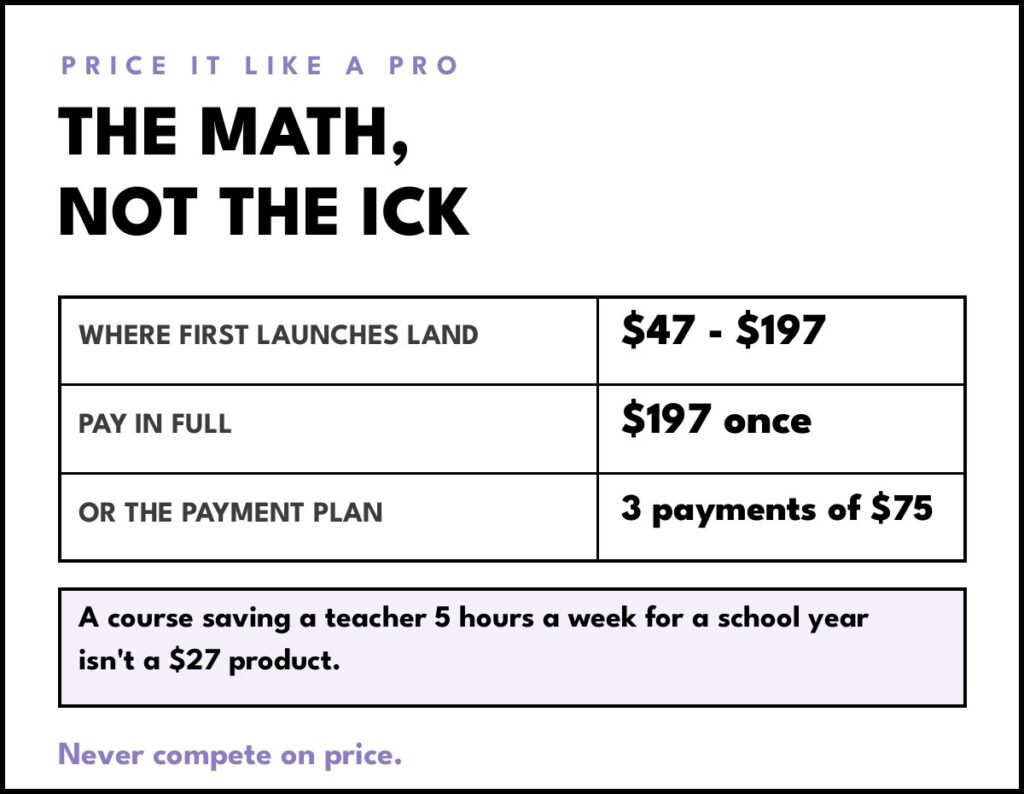
- Anchor to the transformation’s value. A course saving a teacher 5 hours a week for a school year isn’t a $27 product. Price the outcome.
- First launch? Start accessible. Many teacher-creators launch between $47-$197, then raise prices as testimonials roll in.
- Offer a payment plan. $197 once or 3 payments of $75. The plan often wins on conversions.
- Never compete on price. Competing on price is a race you’ll lose. What students pay for is a teacher who actually gets it.
Launch to Your Email List (Even a Tiny One)
The part most first-timers get backward: you don’t launch to “the internet.” You launch to your list.
- Start building now. A simple freebie (checklist, template, mini-training) in exchange for an email address. Even 100 subscribers is a launch audience.
- Teach before you sell. For 2-3 weeks pre-launch, share genuinely useful free content on your topic, so trust is in place before the cart opens.
- Open cart for 5-7 days with a clear deadline. Deadlines drive decisions; “buy anytime” pages convert far worse for first launches.
- Email daily during cart week. Yes, daily. Subscribers signed up to hear from you, and future buyers will thank you for the reminders.
No list yet? Start one today. It’s the most valuable asset in this whole guide.
Frequently Asked Questions
What is the best platform to sell online courses as a beginner teacher?
Start lean with tools you already have: unlisted YouTube videos for hosting, a simple website or Google Site for delivery, and Stripe or PayPal links for checkout. You don’t need an expensive course platform to validate your first course. Upgrade once revenue justifies it. The teaching sells the course, not the tech.
How long should my first course be?
Shorter than you think. Aim for something students complete in 2-4 weeks, roughly 2-4 hours of video in bite-sized lessons. Completion drives testimonials, and testimonials drive your next launch.
Do I have to be on camera?
No. Slides with voiceover is a proven, legitimate format. Many successful teacher-creators never show their face. Appearing briefly (intros, wrap-ups) does build trust, so do what you’ll actually sustain.
How much can I charge for my first course?
Most teacher-creators launch between $47 and $197, then raise prices as testimonials and results accumulate. Price the transformation, not the hours of video, and never apologize for charging for your expertise.
What if nobody buys?
Then you’ve learned something valuable for under $50. Survey your audience, adjust the topic or positioning, and try again. Most successful creators didn’t nail launch one either. Treat the results as data you can use.
Can I really do this while teaching full-time?
Yes. This path is built for exactly that. Outline on weekends, record in batches, launch during a break. Many teacher-creators build the whole business in the margins before it ever supplements their salary.
Get the Full Step-by-Step Roadmap
Reading about course creation and actually doing it are two different things. If you want the complete roadmap (topic validation, outlining templates, the exact lean tech setup, recording checklists, pricing guidance, and a launch timeline) all in teacher language:
My Teacher Course Academy has everything, step by step, in plain teacher language and without a four-figure software stack. It’s the proven path from classroom expert to course creator.
Your unit-planning skills don’t have to stay in the classroom. Packaged well, they’re a course.