
CLASSROOM GAMES
Four of a Kind: A New Classroom Game Template
Every once in a while, a game lands in your classroom and changes the energy of the entire period.
You know the feeling: the volume creeps up, kids who never participate are suddenly invested, and someone asks “can we play this every day?” like it’s a reasonable request.
Meet the Four of a Kind game template: a brand-new classroom game format created because your students deserve better than the same three review games on rotation. It’s part strategy, part luck, and hard to put down (the “please just one more round” kind of addictive, not the “I’m confiscating phones” kind).
Here’s what it is, how to play, why kids lose their minds over it, and what’s inside the template.
What Is the Four of a Kind Game Template?
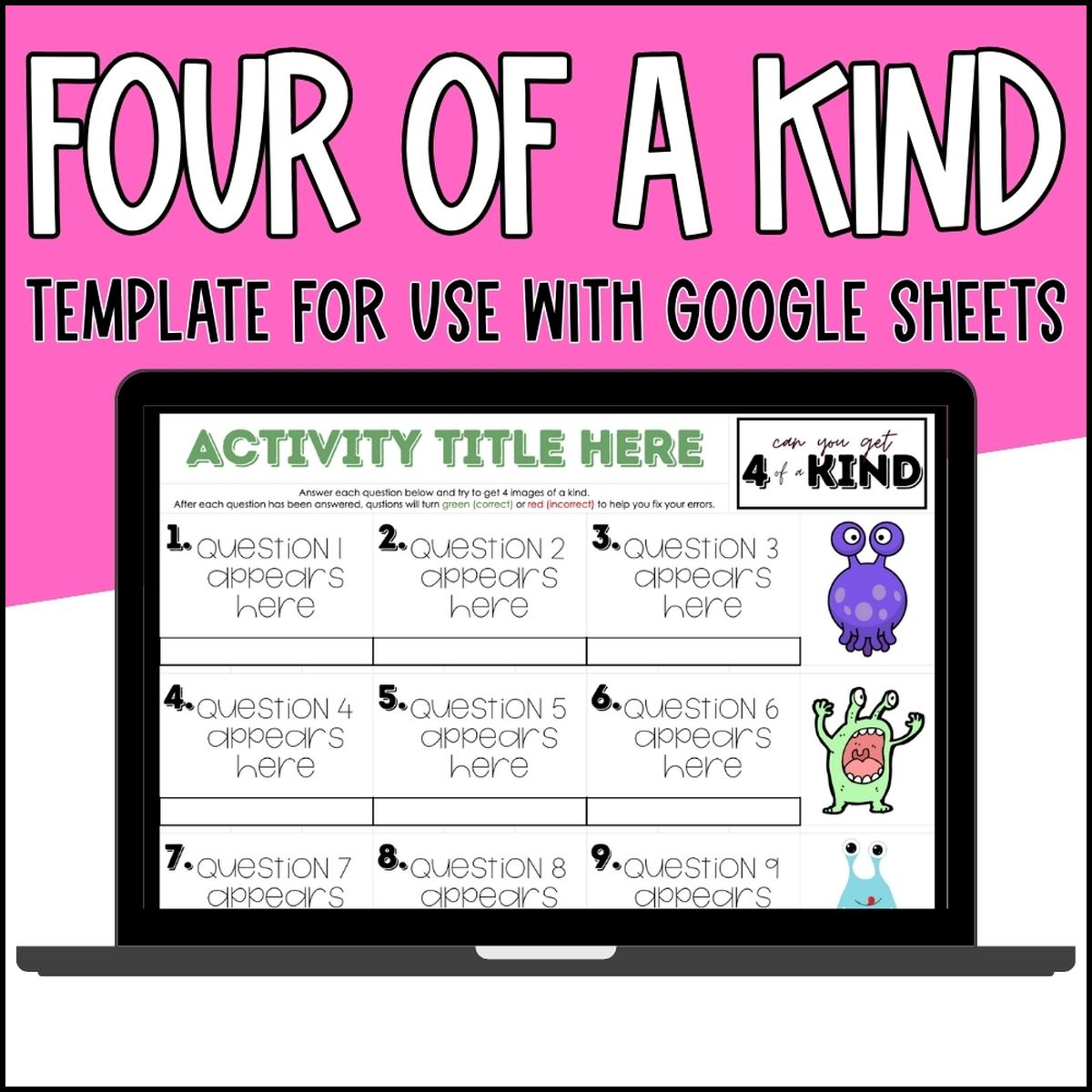
Four of a Kind is a set-collection game built for the classroom. Students answer your review questions to earn cards, and the goal is exactly what the name promises: collect four matching cards (four of a kind) before anyone else. Four of a Kind comes in a Google Sheets version and a PowerPoint version, and there is a free play-only sample on the product page if you want to feel how it plays first. Four of a Kind is $19, and currently on sale for $12.
Think poker night meets test review, minus the poker and plus actual learning. (The stakes are bragging rights, which, among 12-year-olds, are worth more than money.)
The four of a kind game template comes ready to play: the game board, the card mechanics, and the self-checking answer system are all built in. You bring the questions. It brings the chaos (the good kind).
How to Play: The 60-Second Explanation
Here’s your script for Monday morning:
- Split into players or teams. Works solo, in pairs, or as a full-class team showdown.
- Answer to draw. Each correct answer earns a card draw. (Wrong answer? No card. The game is a ruthless but fair teacher.)
- Build your sets. Cards come in matching groups: collect all four of a kind to score.
- Strategy matters. Do you keep drawing for the set you’re close to completing, or pivot when someone’s about to beat you to it? Kids who “don’t like review games” will be doing probability math without realizing it. Don’t tell them. It’s more fun that way.
- First to complete the most sets wins. Expect a final round where everything comes down to one question.
Explaining it takes about a minute. It’ll fill the entire period, plus the hallway argument about it afterward.
Think poker night meets test review, minus the poker and plus actual learning.
One Game, Two Versions: Google Sheets and PowerPoint
If your students are on Chromebooks, take the Google Sheets version. If your room runs on one teacher computer and a projector, take the PowerPoint version.
Four of a Kind lives in the Template Drop in two versions, one for Google Sheets and one for PowerPoint. The goal never changes: answer questions correctly, collect a set of four, win. What changes is where the game runs and how your class plays it, so pick the version that matches your classroom tech.
The Google Sheets version. This is the version this guide mostly describes. It runs in the browser, so students play on their own devices, and Chromebooks handle it beautifully. You share it with a link, students answer on their own screens, and the sheet checks every answer on the spot. Cards stay hidden while sets build, which keeps the secret-set tension exactly where it belongs. It is the pick for one-to-one classrooms, stations, small groups, and remote days.
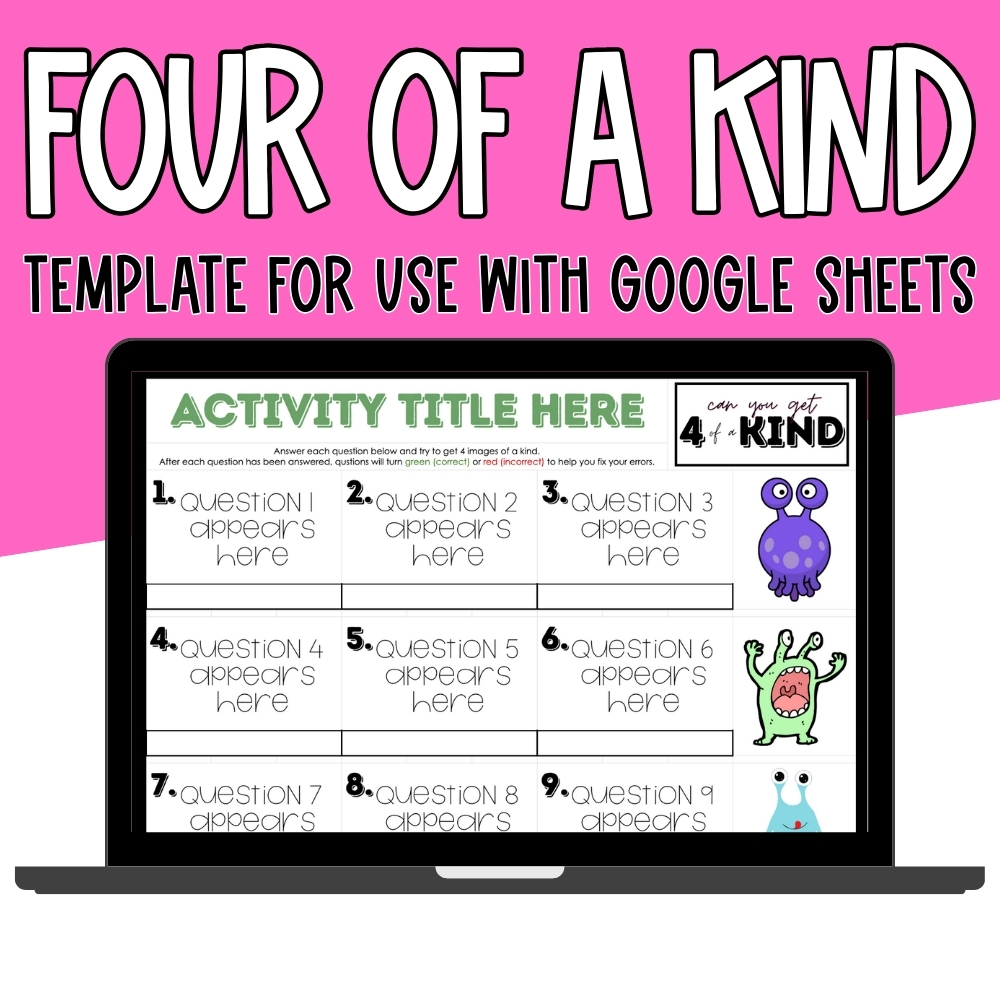
The PowerPoint version. This one runs in desktop PowerPoint on a PC or a Mac, and play spins instead of draws. Students pick a SPIN button, answer its questions, then click SHOW MY SPIN to reveal a random picture from the image bank you built, which can be seasonal, themed, or even photos of your own students. The FINAL SPIN checks every answer, green or red, and four matching pictures wins. Because the whole game lives on one computer, it shines as a whole-class game up on the projector. It needs no internet and no student accounts, and there is a free play-only sample on the product page if you want to feel it first. It will not run on Chromebooks, in a browser, or in Google Slides.

So which one is yours? If your students have Chromebooks or their own devices, take the Sheets version. If your room runs on one teacher computer and a projector, or your school is a Microsoft school, take the PowerPoint version. And if your classroom setup changes during the year, the other version is right there in the Drop.
Four of a Kind vs. Four in a Row: What’s the Difference?
Fair question. The names sound like cousins. If you already use a four in a row template, here’s how the new kid compares:
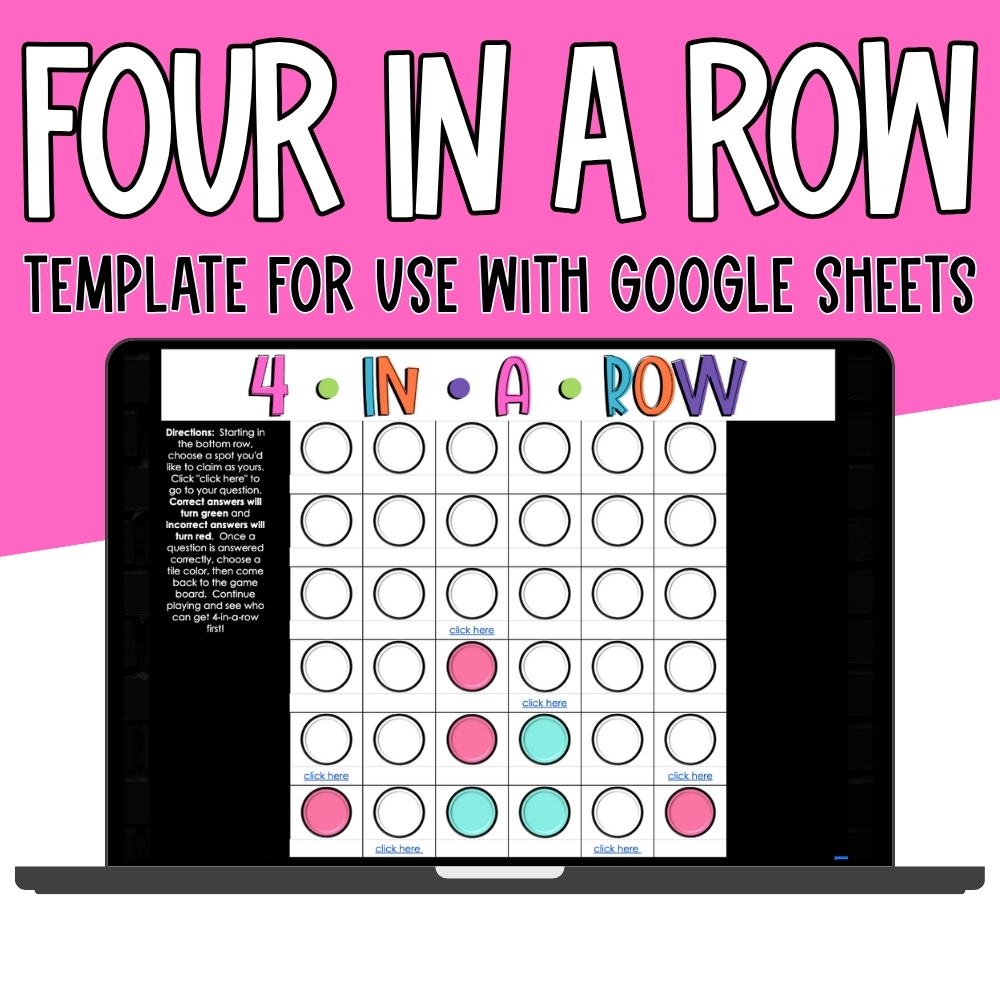
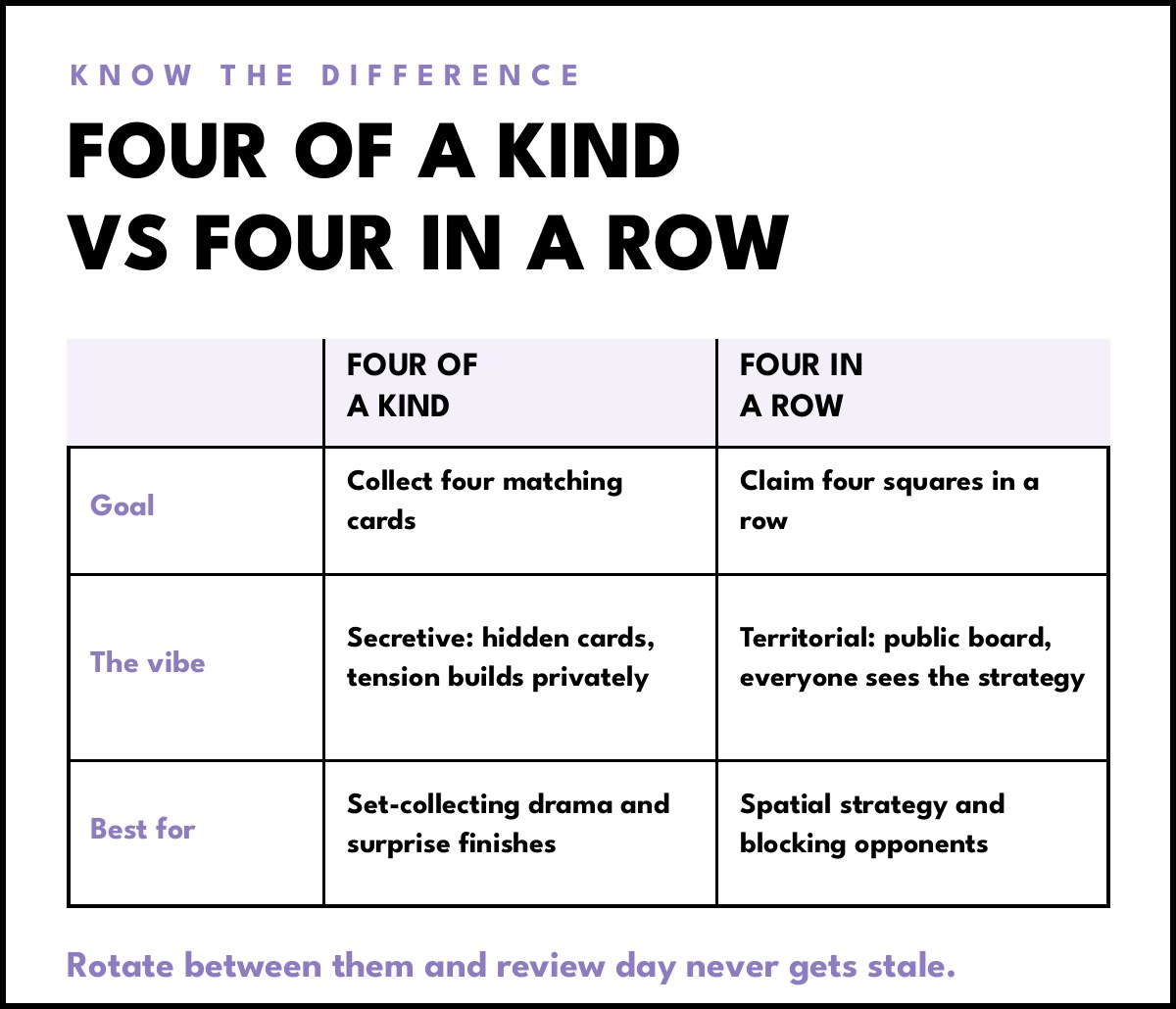
Four in a Row is territorial. You claim squares, block opponents, and think spatially. It’s Connect Four with curriculum. The strategy is visible: everyone sees the board evolving.
Four of a Kind is secretive. Your cards are yours. Nobody knows how close you are to completing a set, which means every draw is a tiny drama. The tension builds privately, then explodes when someone slaps down a completed set out of nowhere.
Different energy, different strategy, same result: an unreasonable number of review questions answered voluntarily. They complement each other beautifully. Rotate between them and review day never gets stale.
Why Students Go Absolutely Feral (Affectionate) for It
- The collection instinct is primal. Sticker albums, trading cards, video game achievements: humans are wired to complete sets. Four of a Kind plugs straight into that wiring.
- Every question matters. In some games, you can coast while your team carries you. Here, every correct answer is a card you earned. No hiding.
- Comebacks are always possible. Down by two sets? One lucky draw streak changes everything. Nobody checks out early because nobody’s ever truly out.
- It’s new. Students have played Jeopardy-style games since approximately the dawn of time. A format they’ve never seen is a novelty, and novelty gets attention fast.
Ways to Use It in Your Classroom
- Unit review days. The classic. Load in your test questions and let the set-collecting frenzy handle the rest.
- Vocabulary showdowns. ELA and world language teachers, this one’s for you: matching sets and word work are a natural pair.
- Math fact fluency. Quick-fire questions, rapid draws. Fluency practice that doesn’t feel like a worksheet wearing a costume.
- Team tournaments. Run a class bracket over a week. The hallway trash talk alone is worth it.
- Early finisher challenge. Keep a solo version linked for fast finishers. They’ll beg for “extra work” and you’ll pretend not to be delighted.
What’s Inside the Template
The four of a kind game template includes everything you need to play on day one:
- The complete game board: polished, colorful, and classroom-ready. No design skills required on your end.
- Self-checking answers: students get instant feedback on every response. Green means go, red means try again. You grade nothing.
- Your questions, your subject: type your questions and answers in once, then swap them for every unit.
- Your choice of format: the Google Sheets version runs in the browser on Chromebooks, laptops, and desktops; the PowerPoint version runs in the desktop app on a PC or a Mac. If your students can click and type, they can play.
- Unlimited replay: new questions, same game. Use it all year across every unit.
Frequently Asked Questions
How is Four of a Kind different from Four in a Row?
Four in a Row is a public, territorial game: everyone sees the board and blocks each other openly. Four of a Kind is private set-collection: your cards are hidden, so every draw builds secret tension until someone completes a set. They use different strategy muscles and create totally different classroom energy.
What grades is Four of a Kind best for?
The format works across upper elementary through high school. The game mechanics are simple enough for younger students to grasp in a minute, and the strategy (when to keep drawing versus pivot sets) keeps older students genuinely engaged. You control the difficulty entirely through the questions you enter.
Does it work on Chromebooks?
The Google Sheets version does. It runs in the browser, which is exactly what Chromebooks are made for, with no installs and no apps. The PowerPoint version needs the desktop PowerPoint app on a PC or a Mac, so it does not run on Chromebooks.
Can I add my own questions?
That’s the whole idea. Type your questions and answers into the teacher tab once, and the game is ready. Change them for every unit, every subject, every class. The template handles the rest.
Is it Google Sheets or PowerPoint?
Both. Four of a Kind comes in a Google Sheets version and a PowerPoint version, and the versions section above walks through how each one plays and which classrooms each one fits.
Can I use it for remote learning?
With the Google Sheets version, yes: share the link through Google Classroom and students can play from anywhere, which works beautifully for virtual review days and snow-day learning. The PowerPoint version works for remote days as a whole-class game while you share your screen.
How many students can play Four of a Kind?
It works solo, in pairs, or as a full-class team showdown, so one student or a whole period can play.
How much does Four of a Kind cost?
Four of a Kind is $19, currently on sale for $12. That covers one version, Google Sheets or PowerPoint, whichever fits your classroom setup.
Get the Four of a Kind Template
New game formats don’t come along often. Grab my Four of a Kind template and bring set-collecting chaos (the educational kind) to your classroom this week.
Your students will thank you. Your test scores might too.